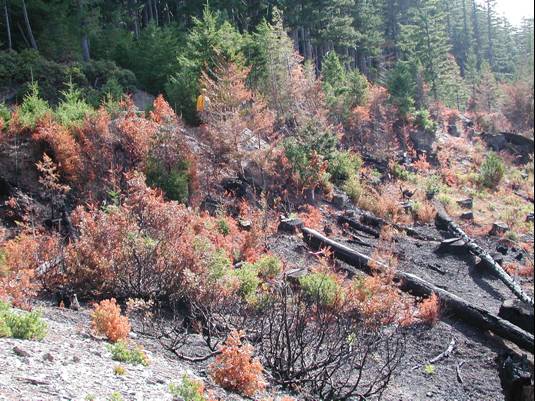

Fire effects

Re-measure
all

Re-measure
selected additional studies
Rationale:
Severe
fires are thought to have large environmental consequences as well as
endangering communities and fire fighters. Immediate effects include changes in water
infiltration, erosion, and mortality of large and small trees,
plants, animals, and microbes; long-term effects include losses of nutrients
through volatilization and leaching (Raison et al. 1985, Brown and DeBoyle 1987,
DeBano et al. 1998). Losses of soil
Tree plots
Understory seedlings and
shrubs
Herbs and mosses
Litter and woody
debris
Re-sample soil
Sample soil respiration
Soil biota:
re-measure ectomycorrhizae and their associated
fruiting bodies, mushrooms and truffles
Birds: re-measure birds
(spring breeding only)
organic matter may affect soil structure and
fertility as well (Belillas and Feller 1998).
If a fire slows vegetative recovery by eliminating sprouting
plants and buried-seed banks, erosion can be amplified (Neuenschwander et al.
2000). Effects on mineral soil are particularly important because
xeric, fire-dependent forests tend to have a large proportion of their
nutrient capital belowground (Keyes and Grier 1981).


Initial results and graphs
related to this objective
related to this objective
Not yet available
Not yet available
Initial results
related to this objective
related to this objective
Not yet available
Not yet available
HOME