Findings
5 6
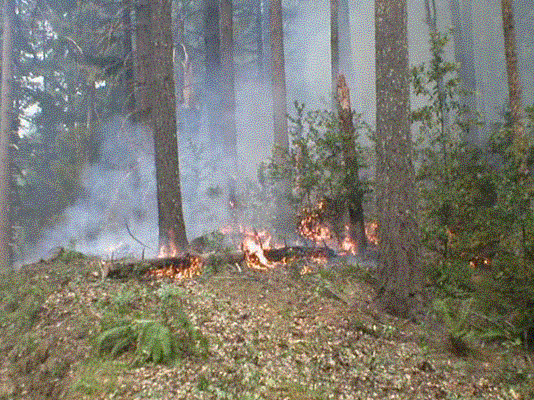

Vegetative
succession, already influenced by the LTEP treatments, changed again after the fire.
Tree mortality ranged from 36 to 100% and tree species composition will change as knobcone pine and shrubby
hardwoods initially dominate
young stands.
At first glance, the numbers of understory
species found appear to radically increase
after the fire (compared to pre-fire frequencies on burned plots), but because we have similar treatments that were not burned,
we can evaluate elements of
change caused by the fire. When
background changes are taken into
account, the fire had positive, negative, or little effect depending on the LTEP treatment.
Small increases were seen in the burned compared to unburned control plots; large decreases were seen in the
burned compared to unburned
Douglas-fir plots; and no or minor changes were seen in the Late-successional, Pioneer, and Underburned plots.
Past
management changed how fire affected species composition.

Added
large woody debris did not significantly affect fire temperature.

Initial Findings
Objectives
related to this finding
Methods
related to this finding
related to this finding
Initial results and graphs
related to this finding
related to this finding
Observed
temperatures were hotter on the high-wood treatment in only 1 of 3 pairs—and
no significant differences were
found. Woody debris, added in 1996 in some LTEP stands, contributed little
additional combusted material in the
fire. About 3 times more fine wood was consumed than larger-diameter wood. The
fire consumed more older, more
decayed, larger-diameter woody debris (85%) than recently added woody debris
(41%).
Objectives
related to this finding
Methods
related to this finding
related to this finding
Initial results and graphs
related to this finding
related to this finding

HOME