Findings 3 4
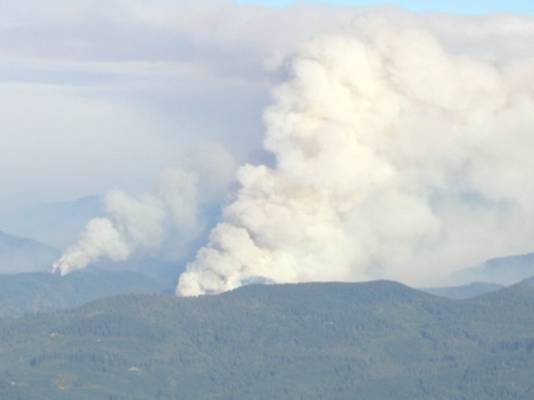

Past management, created as experimental
manip- ulations in the LTEP
study—of 110-yr-old, fire- origin,
Douglas-fir-dominated stands—changed how the fire burned. The thinned and underburned stand had the least mortality (36%);
the two control stands had
intermediate mortality (63 and
77%); thinned, low woody
debris stands had moderately
high mortality(91 and 94%);
while thinned high woody debris
and 6-yr-old pioneer and
Douglas-fir stands had 100%
mortality. The relatively low
mortality in the controls was
most unexpected, and not
predicted by the fire models (Raymond 2004, Raymond and
Peterson
2005). The relative similarity among pairs in replicated
treatments
(controls and thinned low woody debris) gives us limited
confidence in these conclusions.
We must also consider, however,
that fire behavior is influenced by more than fuels. Even though most
stands burned on the same day, how they started, what was adjacent to
them, and
other factors may have come into play.
Potential explanations for
observed
patterns of mortality—including a possible role for mid-story hardwoods removed in the thinning of these
stands—deserve future
attention.
Initial Findings

Past
management changed how the fire burned.
Background
related to this finding
Objectives
related to this finding
Methods
related to this finding
related to this finding
Initial results
related to this finding
related to this finding
Although not surprising, tree mortality
averaged across individual treatments explains about 50% of the variation
in average temperature as measured by the degree that aluminum tags melted along our grid
system. Future work will examine
relationships between caloric consumption, temperature, fuel
distribution, hardwood distributions, slope, woody debris, and other
variables.
Tree
mortality and fire temperatures are significantly related.
Objectives
related to this finding
Methods
related to this finding
related to this finding
Initial results
related to this finding
related to this finding
HOME