Finding 1
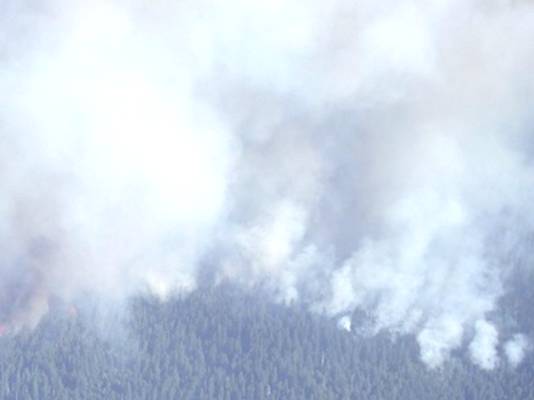

The
Biscuit Fire has important lessons for us, about the effects of wildfire on
forest ecosystems. Our study—above
all else—demonstrates that interactions of wildfire with ecosystem processes
and conditions can create very
complex patterns of response. Complex
responses from previous fires likely created much of the high small-scale spatial variability described for these
sites (Homann et al. 2001). We also
have documented important
temporal complexities. For example,
many legacies from the last fire, about 110 years ago, persisted until fire returned. Legacies include hardwood mid-canopy trees
(tanoak, madrone, and others), over-mature
knobcone pines (with serotinous cones), and apparent seed banks in the soil.
We expect that Biscuit
legacies, by extrapolation, will likely last to the next fire. Spatial and
temporal complexities are extended
by other uncertainties and surprises about ecosystem processes (such as
possible plume-driven soil loss
and a damping effect on fire by mid-canopy hardwoods, discussed later).
The general conclusions are supported by
results from our study. We found that
the degree that ecosystems were
affected by the fire was determined in part by pre-fire management, and that
these various outcomes hold
different consequences for future ecosystem development, including future fire
risks. Some widely held views
on the magnitudes and even directions of management effects were not well
supported. The most extreme effects of fire on soils that we observed at
stand scales should be long-lasting, suggesting that special interest should be paid to pioneering plants
that can help rebuild nutrient pools.
Soil development itself
was substantially affected in many places.
New insights into soils, forest productivity, and diversity in forests with frequent fire-return intervals are likely
with continued investigation.
Background
related to this finding
Objectives
related to this finding
Methods
related to this finding
related to this finding
Initial results
related to this finding
related to this finding

Simplistic
rules sometimes belie inherent ecosystem complexity.

HOME