Finding 9
Smoke
is mostly made of particles including larger,
but light burned organic matter as well as small mineral particles. As
the upper soil burns, some soil particles
disaggregate into smaller fractions. Winds
at the soil surface in hot fires
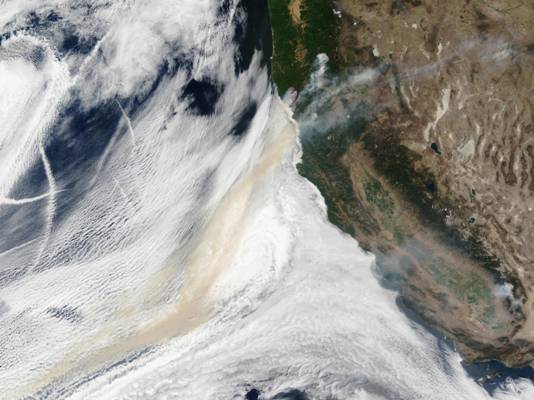
can reach over 100 mph, easily picking up such particles. The satellite photos of the plume extending more than 50 miles across and some days and nearly to Hawaii are suggestive of significant particle movement.
Oregon
Nevada
California
The Biscuit Fire
Wind-driven
erosion was large?
The
mineral components of missing soil can be considered as eroded, unlike most of the organic components combusted in the fire. Mechanisms for this erosion include water transport (there’s little evidence of long-distance transport), soil infilling, and aolian or wind transport during or after the
fire. Many decaying stumps, roots, and logs combusted leaving deep holes in the ground. Short-distance transport would likely fill these holes. Our
sampling did not indicate this process was important across the entire stands (but
our sampling was not designed to test
for this). The most probable
mechanism we have surmised
is fire-driven winds.
sampling did not indicate this process was important across the entire stands (but
our sampling was not designed to test
for this). The most probable
mechanism we have surmised
is fire-driven winds.
Initial Findings
Objectives
related to this finding
Methods
related to this finding
related to this finding
Initial results and graphs
related to this finding
related to this finding

HOME