


Fire intensity
Collect and qualify melting of tags on rebar and
trees;
Perform melting experiments to qualify fire
temperatures;
Aluminum
tags
Map projected temperatures across plots;
Compare average temperatures with BAER projections;
Compare consumption, tree damage, and tag data;
Analyses
Map infrared changes during the fire;
Calculate calorie consumption (∆biomass by
layer);
Calculate average tree damage;
Other
measures of intensity



Rationale: Fire intensity has a large effect on nutrient losses:
N volatilizes above 200 °C, S
above 375 °C,
and P and K above 774 °C (DeBano et al. 1998). Nutrient losses are thought
to affect long-term tree growth
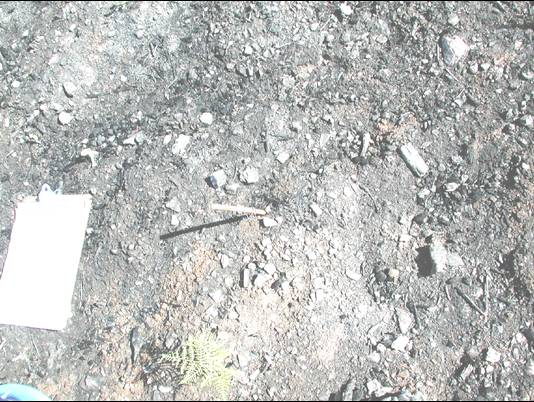
(Busse et al. 1996). Many aluminum tags were
completely melted on our grid systems (fig. 4); because Al melts
above 660 °C (Lide 2002), the potential for major nutrient loss seems high.

Initial results and graphs
related to this objective
related to this objective
Not yet available
Not yet available
Not yet available
Raymond thesis
Not yet available
Not yet available

HOME